Justin Bieber And Why Entertainment Has Changed, Hallelujah
3 minute read…
I was watching Bieber’s Coachella set last month. Firstly, I thought it was really quite good, and at the risk of turning every cultural moment into a marketing piece, it really got me thinking about what his performance said about entertainment in 2026.
Firstly, the traditional pop music spectacle is certainly not dead. The Sabrina Carpenter headline set the night before showed just that (so I’m told). Crazy set design, huge crews, and as many outfit changes as possible. But Bieber channelled something completely different. If you haven’t seen it, most of his set was just him on an expansive set. But the key moment in question, the artist sat at his laptop, scrolling through YouTube.
Why’s that so interesting? Well, firstly, he was streaming. A live feed of his set, with his at-home fans commenting in real time, he asked them for song requests, and his MacBook camera streamed the set as though on a Teams call. Then, he jumped on YouTube, where his career started. He played actual memes of himself from throughout his career, then played his own songs, with the video beamed onto the main screen at Coachella as he sang along with his younger self.
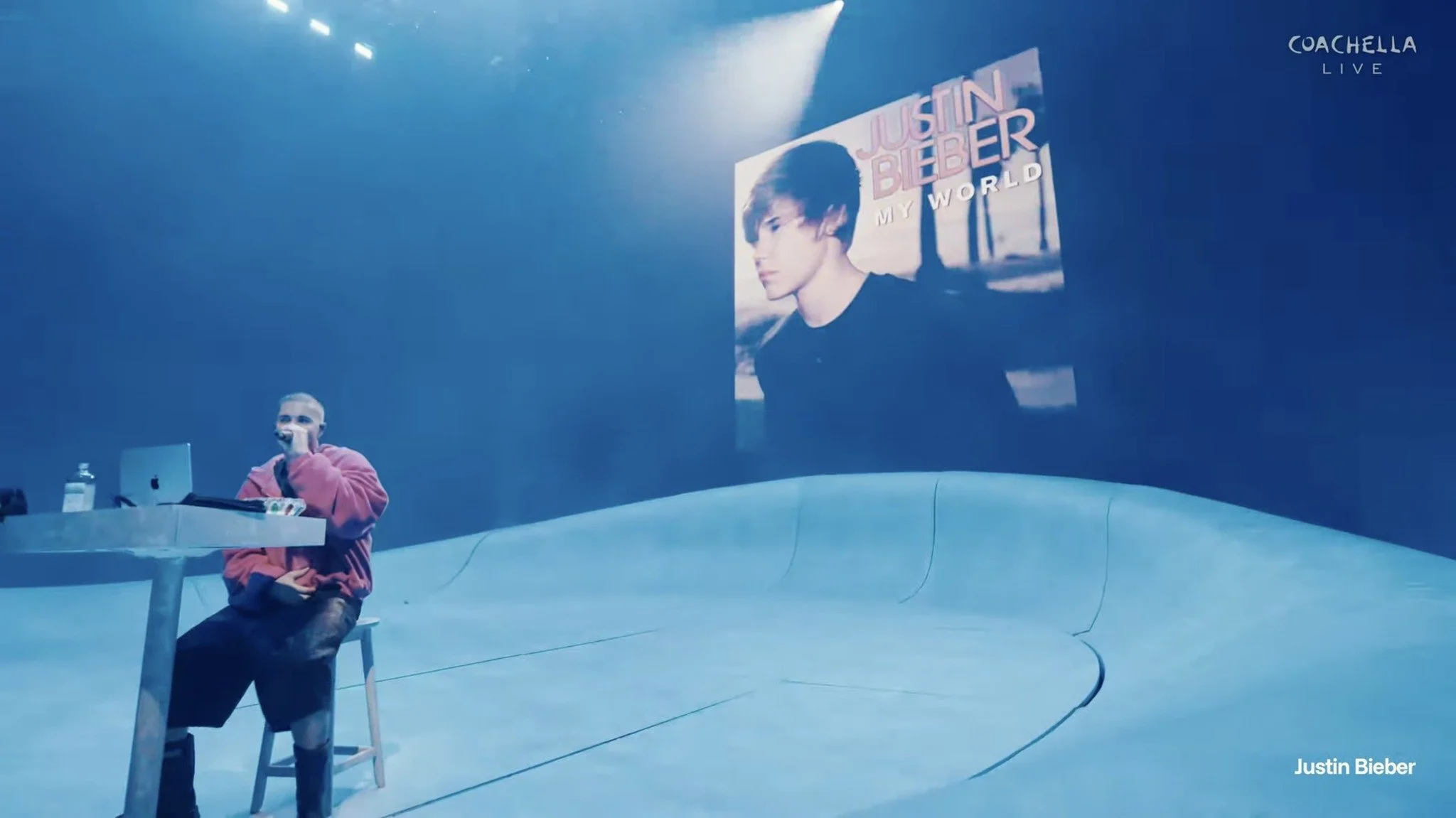
Justin Bieber’s younger self joins the IRL popstar on stage from a streamed screen
What was so fascinating was that it was a signal of what has changed in entertainment. The audience who weren’t in attendance were a focus for him, he added humour to his set, he performed requests in real-time. It was like being in rehearsals with him. Look, maybe this wouldn’t have cut it on the Pyramid stage on a wet Friday in Somerset. But that’s not the point. We were in California, Bieber made his name through uploading music to YouTube and has built a career alongside his digitally-native audience. Aesthetically as well, it was cool af, the rolling topography of his set design framed one man at his laptop. The huge, main-stage screen-share as he typed in ‘deez nuts meme’ Into YouTube. It was different.
In a completely different sphere, literally, it reminded me of the thoughts I had while watching Louis Theroux’s ‘Inside the Manosphere’ documentary recently. An alarming take on the toxic masculinity that lives in some not-so-small corners of the internet. The show is a clear display of how entertainment has changed. Ignoring the fact these creators are somehow seen as entertainment in first place, as they stream 24/7 Louis’ crew accidently become part of their story in real time, but for a documentary destined for release 6-months later. It’s an example of how narratives can no longer be dictated by a large docu-film crew. You can't control the story you tell when most of your interactions have already been clipped up and disrupted across socials, 6-months before the polished doc goes live.
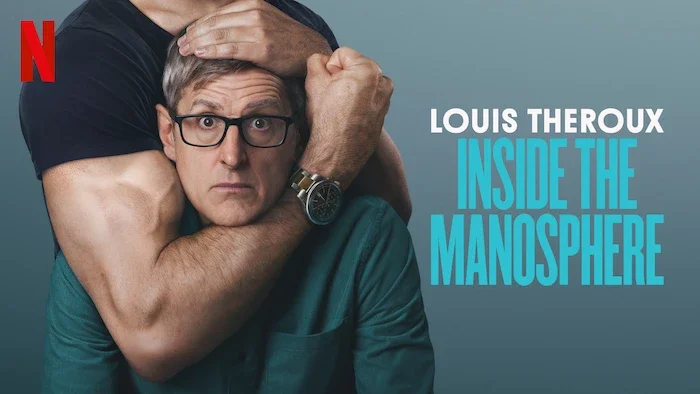
It makes you question how authentic past documentaries truly are, it’s a case for truer stories, but also changes how streaming and entertainment companies have to commission work. It also meant Louis became victim to the manosphere in real-time, at one point he becomes the interviewee, as he was questioned by the streamers using live comments from their streaming chats.
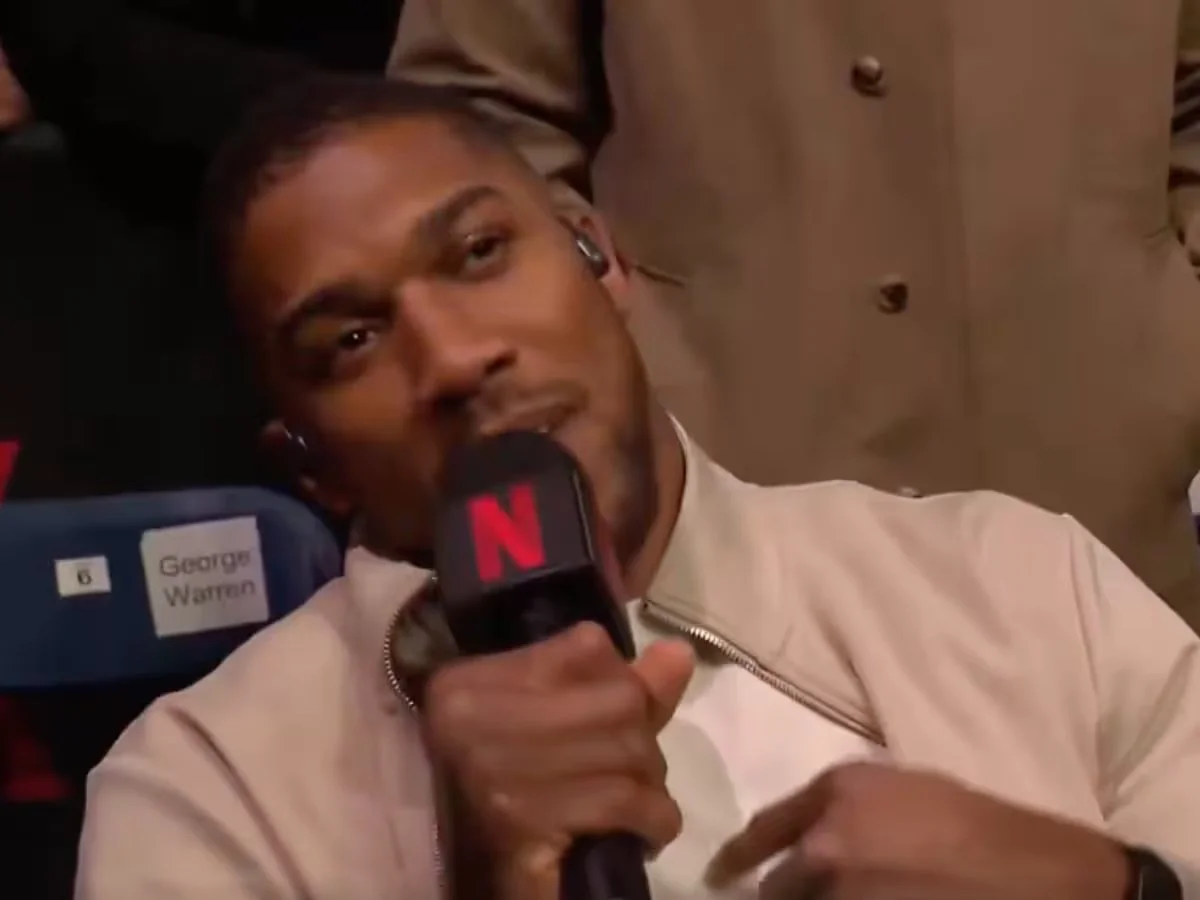
That’s not the only case study, it’s changing in the Netflix world. I caught the Tyson Fury fight recently, as boxing becomes the latest discipline to get the Netflix treatment. The post-fight ended with an Anthony Joshua v Fury exchange with Netflix branded mics. Sat at home, the back and forth felt more native to performative WWE wrestling, than real boxing. But inside the Tottenham Hotspur stadium, 90,000 watched on big screens… with no sound. Perhaps they needed Bieber’s technical team?
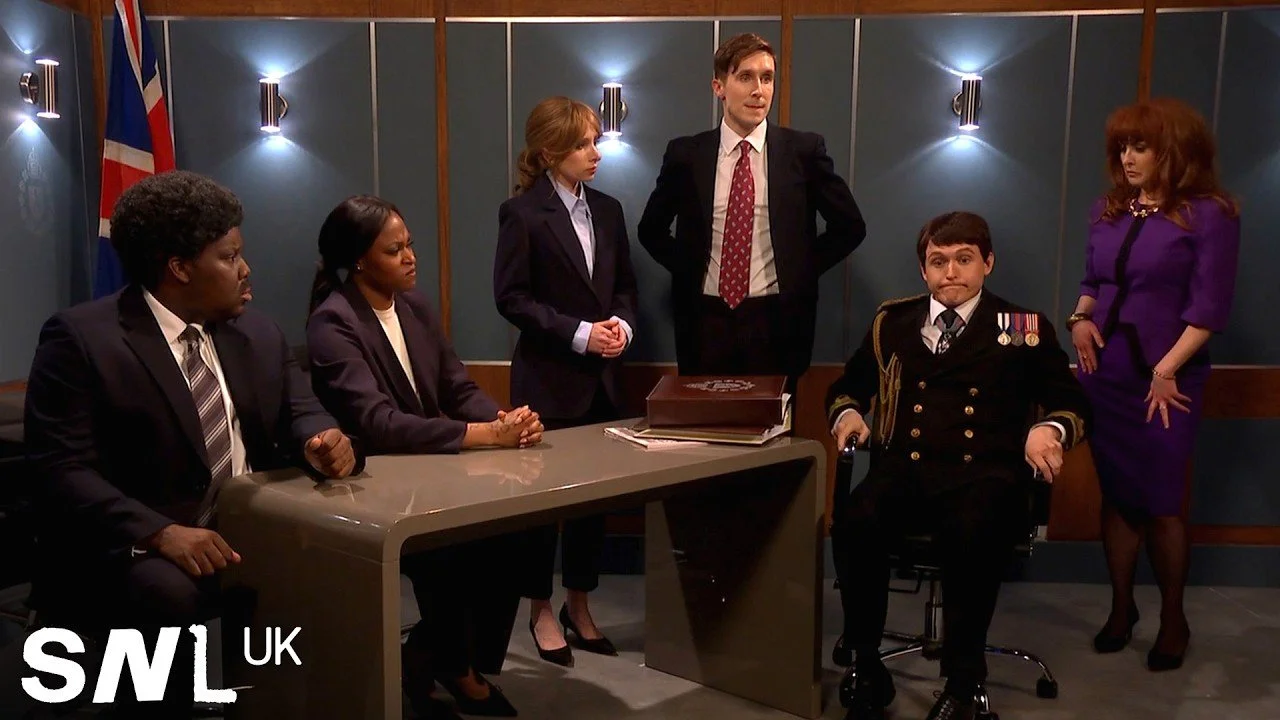
One final case study, SNL UK, an American cult classic, now built for a British audience. Live on Sky One, the viewer numbers are scarily low, but what did we expect? Meanwhile, their Prince Andrew skit amounts 2.4m+ views on YouTube alone. Begging the question, what numbers are Sky looking at to mark success? Live viewers, or the reach over the next seven days across channels as viewers discover, share and have chuckle on their own terms.
Now, I’d suggest Biebchella and the Manosphere are worlds apart, but they both nicely address very different things. The commonality is that entertainment has changed. The old set-ups and metrics don’t work, there’s new approaches now, which Bieber is ahead of. Bieber’s set was iconic, it was a display of modern entertainment. While recent programmes on major streaming channels show that old production methods need a rethink, or that execution is everything.
At Unfound we’re producing content more than ever, Hallelujah. We’re on set every week and loving it. We are thinking about how we add high-production polish to contemporary content styles, how we find unique stories in real time. If you need help shaping your brand through culture design and language, say hello@unfound.studio