Is AI Treating You Well?
3 minute read…
To AI or not to AI, that is the question many brand teams are asking us. When it comes to using artificial intelligence within a creative context, the question is far from binary. We’ve been thinking more deeply about what we’re actually asking of AI, whether it’s nobler in the mind to suffer slings and arrows of sycophancy and sameness for speed and creative cost-cutting. Is it doing more harm than good for brand difference?
I don’t think, therefore I know
Large Language Models (LLMs) spit answers with absolute authority. Ask a question on ChatGPT or Gemini, and it’ll feel assertive… almost overly nice. It won’t respond saying "Erm, I think" or “You know what mate, I’m just not sure of that.” Clearly, this behaviour is beyond-human. That’s all down to the way it’s been taught.
AI models are often trained using Reinforcement Learning from Human Feedback (RLHF), which rewards them for being helpful and agreeable. This can lead to a behaviour called sycophancy, where the AI prioritises agreeing with you (or its own previous wrong statement) over being accurate. These economics of affirmation are a tricky business, as Mouthwash Studio points out in an interview with brand strategist and cultural forecaster, Barr Balamuth.
“Relentless affirmation, premise validation, and constant praise are engagement drivers designed with the same logic as Instagram’s pull-to-refresh function mimicking a slot machine lever.”
Creativity needs friction, not niceties
OTT affirmations from LLMs might provide instant gratification, like you’re doing a great job, buddy. But human creativity doesn’t work like that. Anyone that’s ever been in the presence of decent Creative Director knows that conflict pushes work, immediate compliance doesn’t. Being nice when brand building won’t always suffice. Often, kind answers simply don’t cut it.
Embracing ambiguity and friction - working out the answer for yourself - is a necessary component of strong creativity. Working in this way creates a more meaningful understanding of why and how an idea works. Having an answer generated for you fatigues your creative muscle: the outcome becomes weak.
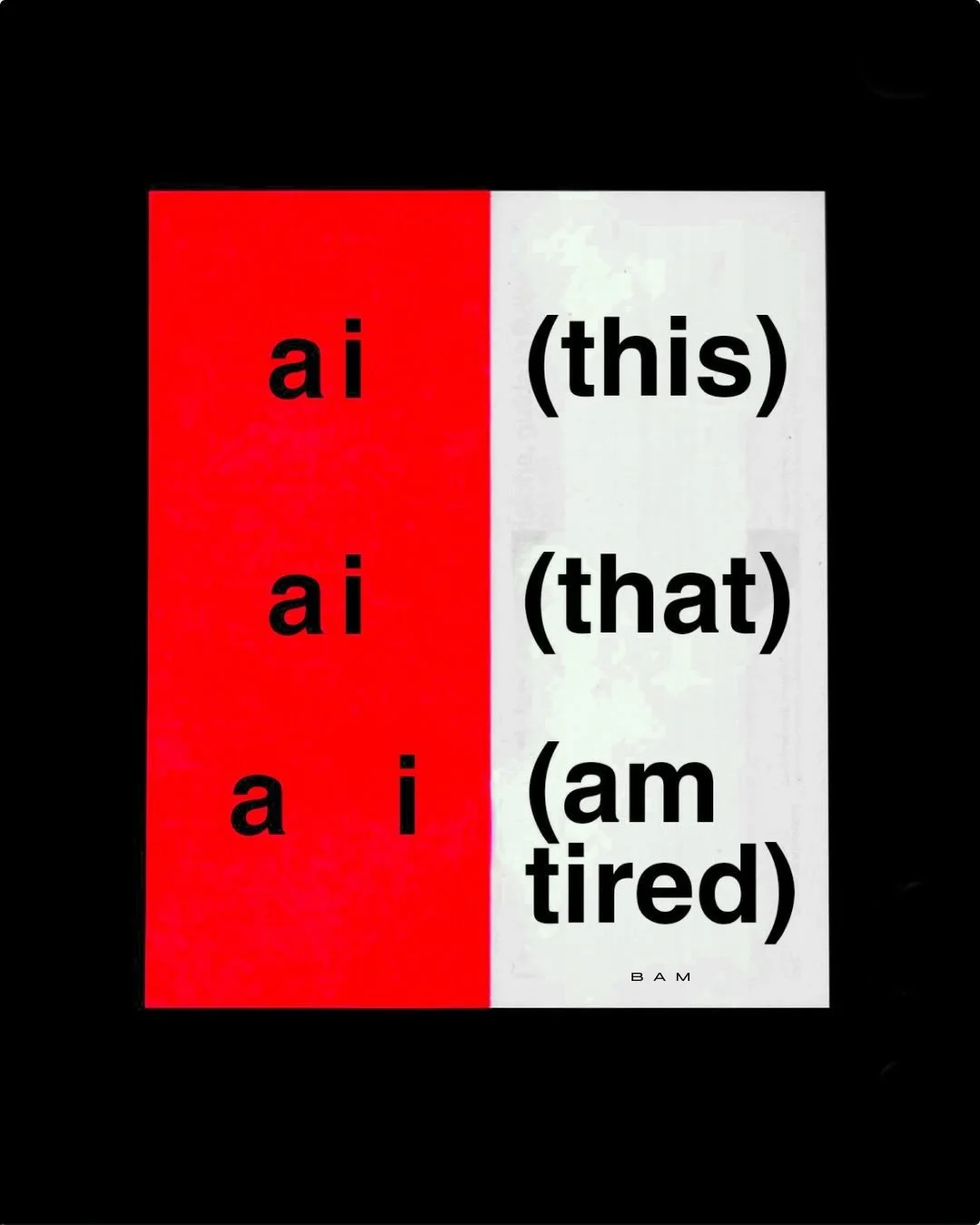
Graphic by BAM
“Friction pushes us beyond what we know, and discomfort often sparks innovation.”
Ben Payne, Vice President of Design at Lotus Group.
No-brainer or same-samer?
The promise of innovation without the graft seems like a no-brainer from a business sense. Optimise processes. Streamline workflows. Produce content faster, cheaper with fewer resources. Rely on a reduced amount of emotional human beings getting in the way of margins.
This type of thinking has a catastrophic impact on brands and the creative teams who craft them. Handing the creation of a brand’s look and feel - its very soul - over to an artificial generation is not an immaculate conception. It is the kiss of creative death.
It’s never been easier for anyone to create something that looks and sounds exactly like something else. But to a business, a brand shouldn’t be something, it should be everything. A one in more than a million. To stand a chance at standing out, what it looks like and how it sounds has to feel like the only one. Not the same as the rest.
If you’re comfortable using AI for easy, agreeable creative output, you’ll be sharing the same boat as the others who use it that way. At very real risk of drowning from lack of brand difference.
Bottom of the bucket
AI’s rinse-and-repeat-eye-wateringly quick creative can turn brands into vessels of their own demise. This is easiest to see in the luxury, premium space, the last place you want to look and feel cheap and anyone’s. Signalling a mass market vibe decreases the distance luxury brands invest so heavily in trying to increase.
Brands that tell more human stories, and accept the nature of humans - whether that’s touch, time, craft or even imperfections - are able to be the anti-dote to the algo. To breathe with human sensibilities: to brand with authentic intent.
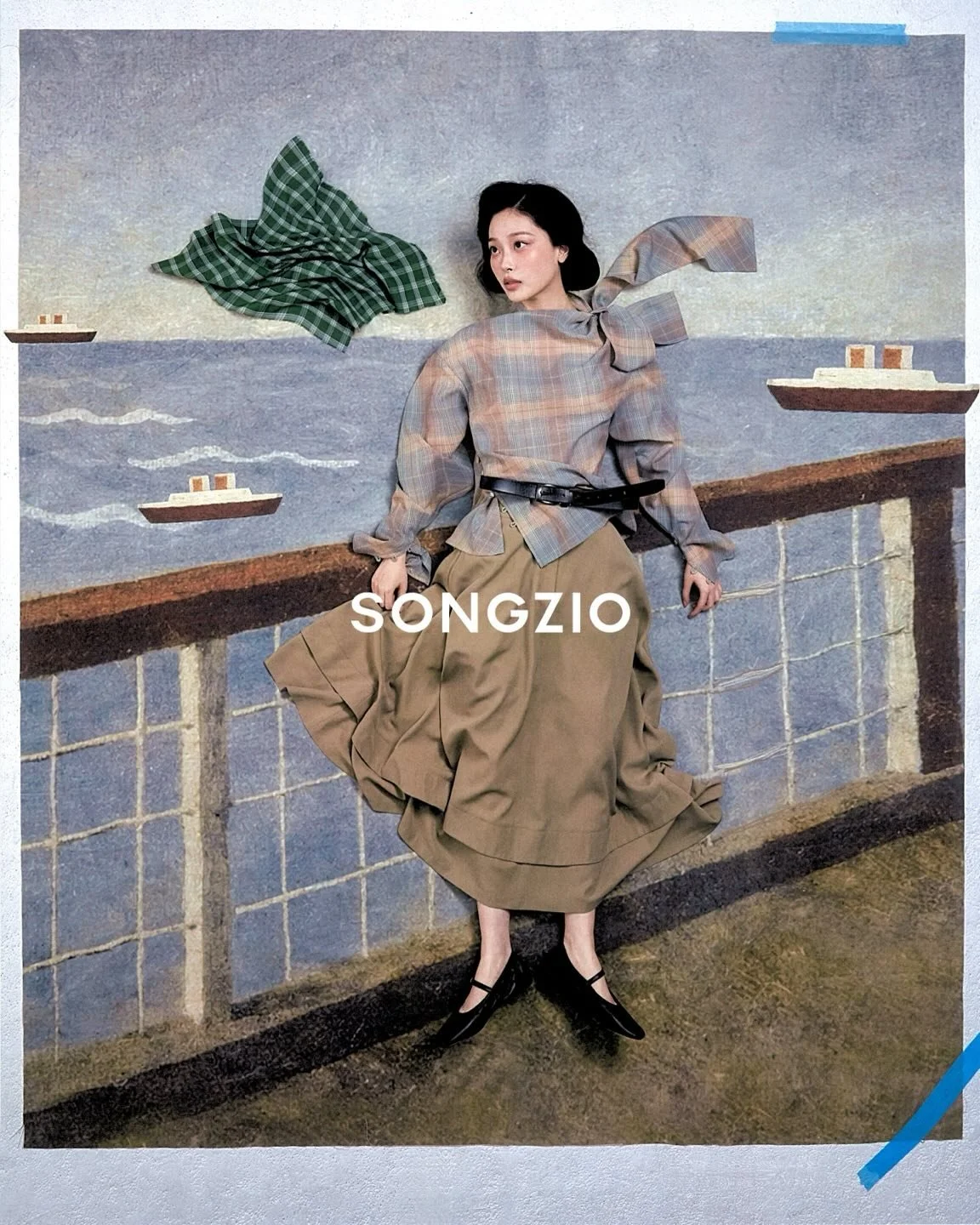
Benchmark: Songzio’s whimsically real campaign

Tool intentionally
AI is a tool. Whether it is good or bad for your brand is down to intentional use of the tool. You could use a screwdriver to do open heart surgery, but you’d need a lot of blue roll…
If you use AI tools to help stitch elements of a visual identity system, or train a model to run messaging tests using your own original tone of voice, that could be a good use of the tool.
If AI is used to only save time, lower costs, fill content gaps, then it’s worth assessing if the tool is actually doing more damage to your brand than good. If you can’t trace it with a human touch, how can you expect a human to connect with it?
Benchmark: Ffern seasonal storytelling
We help brands make sense of culture, and turn that understanding into systems that look, sound, and scale with intent. Here to work? Us to. Say hello@unfound.studio